
Does Acupuncture Help Hormone Balance?
Acupuncture is one of the most effective natural approaches to hormone balance I know of. I’ve been treating women with hormonal conditions for over 20 years now, and it remains the thing I’m most passionate about in clinic, because the changes I see are real, they’re measurable, and they make such a tangible difference to how women feel in their everyday lives.
If you’ve been dealing with a hormone imbalance, whether that looks like irregular periods, perimenopausal symptoms that appeared out of nowhere, PMS that’s ramped up in your late thirties, or fertility challenges that nobody can quite explain, acupuncture is genuinely worth exploring. Let me walk you through how it actually works.
Your Hormones Are Run by a Conversation, Not a Switch
One of the things I find myself explaining most often in the clinic is that hormones don’t operate in isolation. They’re part of an ongoing conversation, between your brain and your ovaries, specifically the hypothalamus, the pituitary gland, and the ovaries. In the medical world, this is called the HPO axis, and it governs everything from when you ovulate to how well you sleep to whether your mood feels steady or completely unpredictable.
When stress, poor sleep, inflammation, or a major life transition like perimenopause disrupts that conversation, your hormones lose their rhythm. Oestrogen, progesterone, FSH, LH, they all start behaving erratically. And that’s when symptoms show up.
Acupuncture works directly on this system.
It helps regulate the signals between your brain and your reproductive organs, calms the nervous system so your body can stop running on adrenaline, and supports blood flow to the uterus and ovaries.
There’s a growing body of research behind this too. A literature review published in Evidence-Based Complementary and Alternative Medicine found that acupuncture increased oestradiol levels in the majority of studies examined and showed measurable effects on progesterone and gonadotropin hormones across a range of women’s health conditions.
In Chinese Medicine, we’ve been describing this pattern for a very long time, just in different language. When Liver Qi is stagnant, Qi isn’t flowing smoothly and everything gets stuck - your mood, your cycle, your digestion.
When Blood is deficient, the body doesn’t have enough resources to build a healthy lining or sustain energy through the month.
When the Kidney system is depleted (and this is what we so often see in perimenopause), reproductive vitality starts to wane. Acupuncture restores flow and nourishes what’s been running on empty.
What Hormone Imbalance Actually Feels Like
The women who come to see me rarely walk in talking about their hormones. They come in saying things like:
I’m waking up at 3am every single night and I can’t get back to sleep.
My periods have gone completely haywire.
I feel anxious and I don’t know why. I’ve never been an anxious person.
My skin has changed and nothing I’m doing is helping.
I’m exhausted but somehow wired at the same time.
PMS used to be a mild inconvenience and now it takes me out for a week.
I just don’t feel like myself anymore.
These are real things I hear in clinic constantly. And every single one of them can be connected back to hormonal shifts that are going unrecognised or unsupported.
What I find so interesting, and this is where Chinese Medicine really comes into its own, is that the same label of “hormone imbalance” can look completely different in two women sitting in the same chair. The woman waking at 3am with anxiety and dry skin is showing me a different pattern to the woman with heavy periods, fatigue, and brain fog. Both need hormonal support. Both need entirely different treatment approaches.
What Acupuncture Can Help With
I treat women across a wide range of hormonal and reproductive conditions, and the evidence base is genuinely growing. Here’s where I see acupuncture making the biggest difference.
Perimenopause and menopauseare probably what I treat most frequently now. Sleep disruption, hot flushes, mood changes, anxiety that seems to come from nowhere, brain fog, the list goes on.
A 2025 systematic review in Frontiers in Psychiatry found that acupuncture significantly outperformed control groups for menopausal depressive symptoms and improved quality of life. That tracks with what I see every week in clinic. Women come in feeling scattered and depleted, and within a few sessions they’re sleeping through the night again.
Irregular periods and PMSrespond beautifully to acupuncture. We’re supporting blood flow, regulating the hormones that drive ovulation, and calming the nervous system’s grip on the cycle. So many women tell me their periods became unpredictable or painful in their mid-thirties and they were just told it was normal. It might be common, but that doesn’t mean it’s normal or it shouldn’t be addressed.
PCOS and ovulation difficultiesare areas where the research has really accelerated. A 2026 network meta-analysis in Frontiers in Endocrinologyfound that acupuncture improved insulin resistance, reproductive hormone levels, and ovarian function in women with PCOS. I love working with these patients because the body responds so well when we give it the right input.
Fertility and IVF supportis close to my heart. Acupuncture supports uterine receptivity, ovarian response, and the emotional resilience that this process demands. A2026 multicentre randomised controlled triallooked specifically at acupuncture for women with poor ovarian response during IVF, and the results are encouraging.
Anxiety, burnout, and nervous system overwhelmare deeply connected to hormone balance. Cortisol (your stress hormone) directly suppresses reproductive hormones. When your nervous system is stuck in overdrive, your cycle, your sleep, your mood, everything downstream is affected. Acupuncture helps calm that stress response, and when the nervous system settles, hormones often start to regulate on their own.
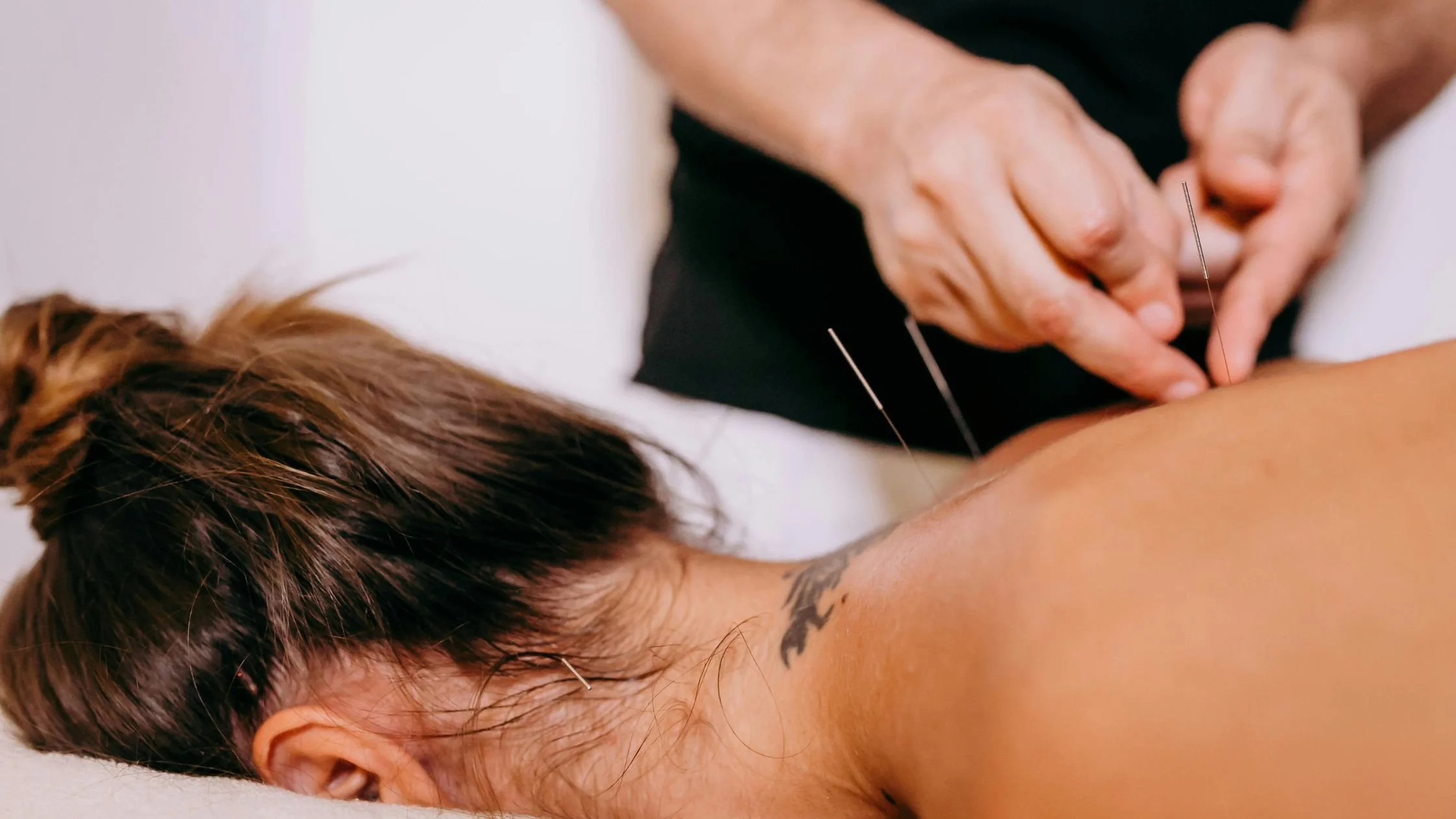
What Actually Happens When You Come In
I think a lot of women imagine acupuncture is just about the needles. It’s really not.
This is what happens when you step into Clinic:
The initial intake form that all new client fill in asks for any medication & supplements they are taking, (so we can integrate OR if it's been prescribed by Dr Chatty we can personalise :) I also ask for any blood tests in the last 6 months so I can look at them from a TCM perspective and see what is "optimal" and not just passing as ok. The initial consultation is also really in depth (and is longer than a return session) TCM praccies ask what might seem a lot of weird questions, but I'm loooking to gain a really complete understanding of who you are and how you move in the world.
From there, every treatment is tailored to you. If you’re dealing with Liver Qi stagnation driving PMS and irritability, the points I choose are completely different to what I’d use for a woman with Kidney deficiency contributing to perimenopause and fatigue. Twenty years of doing this work means I can read those patterns quickly, and it makes a real difference to the results.
Most women start noticing shifts within four to six sessions. Sleep tends to improve first, which makes sense, because everything works better when you’re actually resting properly. Then energy lifts. Then cycle changes start to follow. Hormonal recalibration is cumulative, it builds on itself, which is why I always say consistency matters more than any single appointment.
Why We Look at the Whole Picture
This is probably the thing that sets Chinese Medicine apart most clearly. Rather than measuring individual hormone levels and treating them in isolation, we’re looking at the relationships between your systems. Your hormones don’t operate independently of your digestion, your stress, your emotions, or even the season you’re moving through.
There’s a beautiful concept in Chinese Medicine called Yang Sheng, which means nourishing life. It’s the idea that the small, daily habits we build into our lives, the nourishing food, the rest, the gentle movement, the connection, these are what protect our vitality over time. It’s not about pushing harder or optimising more. It’s about giving your body what it actually needs so it can regulate itself.
When we address the underlying patterns, hormone balance often follows naturally. Not because we’ve overridden anything, but because we’ve given the body enough support to find its own rhythm again.
If This Resonates, We’re Here
If your cycle has changed, your mood feels unfamiliar, your sleep has fractured, or you’re navigating perimenopause and feeling like nobody is really listening, I’d love to talk to you about what acupuncture could offer.
At Chevron Island Health Studio, I work with women across the Gold Coast navigating hormone imbalance, perimenopause, irregular periods, fertility, anxiety, sleep disruption, and postpartum depletion. We take the time to understand your unique pattern and work with your body, not against it.
You are warmly invited to come and see what’s possible with the right support.